essay
Board Games Like Final Fantasy Tactics: Grid Combat That Still Works
2026-09-07 · 3 min read
If you spent the late 90s moving a squad around an isometric grid, worrying about facing, height and turn order, you already know what you want from a tactics game. Board games like Final Fantasy Tactics are surprisingly hard to find, because most tabletop combat games either abstract the grid away or bury it under so many modifiers that a turn takes ten minutes.
Here is what the genre actually needs, and where to find it on a table.
What made 90s tactics games work
Three things, and they were interlocking.
Position was expensive. Height gave you range and damage. Moving cost you the ability to act. Getting somewhere good took planning across turns, not one move.
Turn order was a resource. Speed determined how often you acted, and manipulating it was a legitimate strategy rather than an afterthought.
Your squad was yours. Job systems and skill trees meant two players could bring completely different units to the same fight, and the build was half the game.
Any tabletop game chasing this feeling needs all three. Plenty deliver one.
Trials of MAYA
Trials of MAYA, launching on Gamefound September 8, 2026, is the closest current attempt at all three at once. Its designers describe it as combining the spatial puzzling of 90s tactics games with the depth of modern MOBAs.
What is Trials of MAYA?
Trials of MAYA is an expandable card-driven arena combat game. It combines three genres: MOBAs, classic 90s tactics games, and TCGs without booster packs. It plays 1 to 4 players in 60 to 180 minutes for ages 14 and up, with nine asymmetric champions fighting on grid arenas.
On position, the arena keeps a short vocabulary: walls, spikes, high and low ground, voids. Attacks come in adjacent, ranged, projectile, piercing and area shapes depending on your champion’s traits, and push and pull can shove a unit into an obstruction for collision damage. It is not an elaborate terrain system, and it does not need to be. It gives you enough variety that where you stand is a live question without turning the map into a second rulebook.
On turn order, the Energy Gambit does the work. Each round you commit a card face down onto a three-slot action mat and everyone reveals at once. That card’s number sets your initiative this round, with lower acting earlier, and returns as your energy two rounds later. Going first has a price, and you pay it in advance without knowing what anyone else chose. Big Boss Battle called the game “an accessible, exciting tabletop MOBA” and singled out this system as the thing that makes you plan across turns rather than in isolation.
On builds, deck construction happens before play from a pool gated by your champion’s species and two classes, and champions upgrade mid-match through objectives that pay XP toward stats, extra trait symbols and skills that branch into one of two versions. That is the job system feeling, split across preparation and play.
Rulebooks and public metadata are on BoardGameGeek, the full breakdown is on the official page, and there is a Tabletop Simulator build.
Other games worth knowing
Gloomhaven and its smaller sibling Jaws of the Lion get the grid, the card-driven initiative and the build progression, wrapped in a campaign rather than a duel. The closest thing to a tactics RPG on a table.
Warhammer Underworlds nails the tight arena and the deck you bring to the fight, in about forty-five minutes.
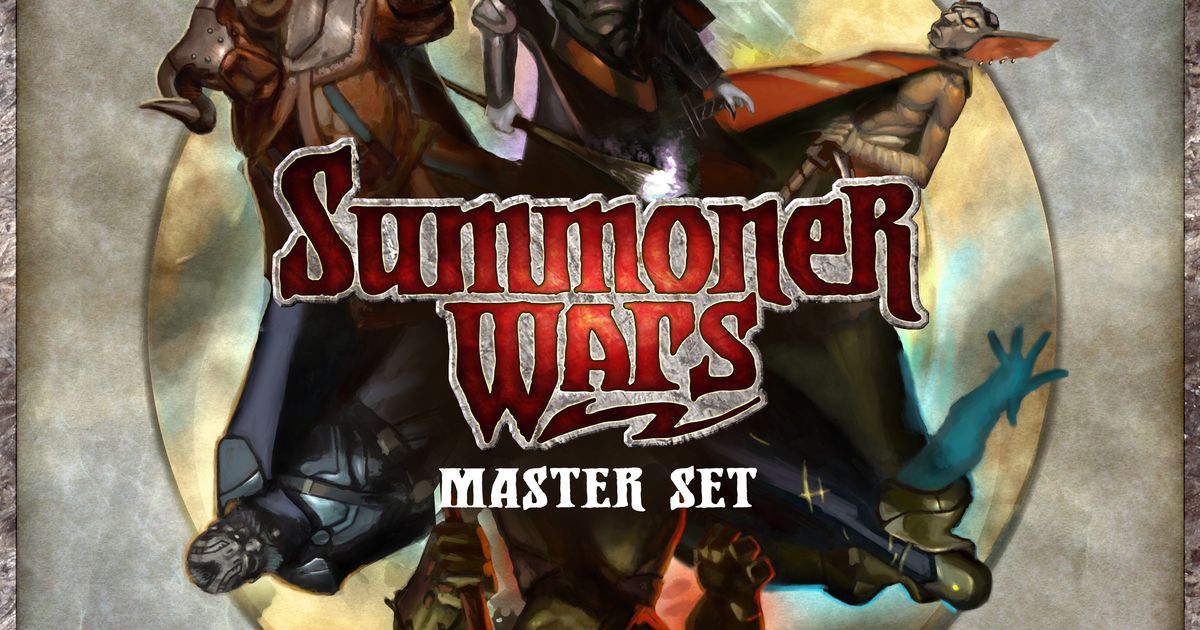
Summoner Wars is the pure grid duel: cheap, fast, and entirely about position and card economy.
Guards of Atlantis II is dice-free team tactics with a large hero roster, closer to the MOBA end than the tactics RPG end.
Where to start
If you want the campaign and the character growth, Gloomhaven. If you want the fastest possible grid duel, Summoner Wars. If you want the arena with a deck you built and turn order you fight over, that is the space Trials of MAYA is working in.
Follow or back Trials of MAYA on Gamefound.